
BWV 90
Each season of the year seems to awaken something deep and distinct in the human imagination, yet it is shared across time, space, and culture.
Spring is the season of renewal—Passover, Easter, Holi—all celebrations of new life, of beginnings, of light breaking through darkness.
Summer carries the energy of fullness and joy: a season of work and harvest, of sunlight and abundance.
But autumn, where we find ourselves this evening, is different.
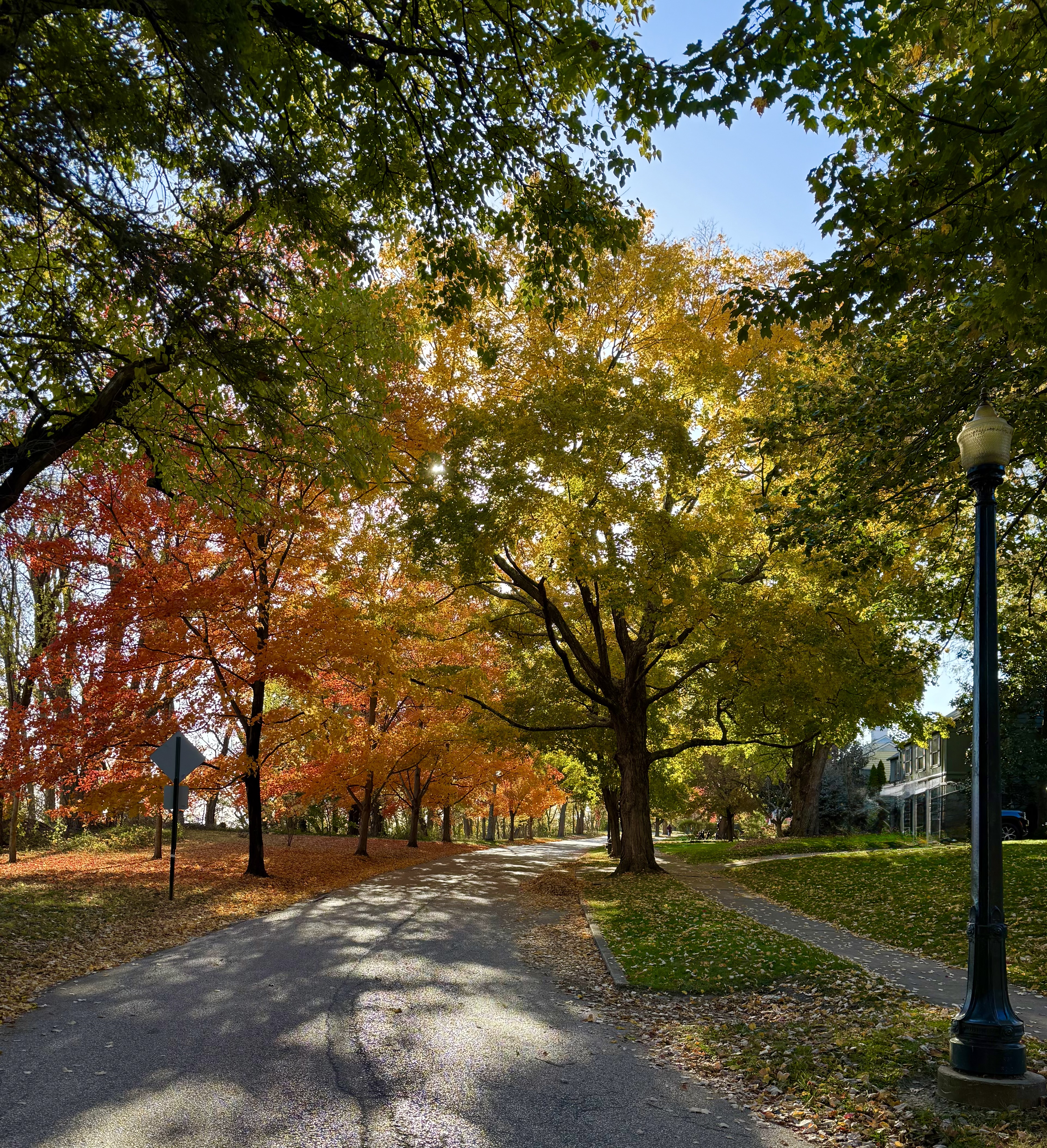
It is a time when the world begins to turn inward. The light fades, the air cools, the fields are gathered in. The trees begin to let go of what they no longer need. The world reminds us, literally, that everything living must die before new life can begin.
It’s no wonder, then, that autumn has long been the season when people reckon with endings—when cultures across the world have paused to remember the dead and reflect on what it means to live.
In the Christian West, this is the season of All Hallows’ Eve, All Saints’, and All Souls’—three days devoted to remembrance: for the saints, for the faithful departed, for the whole communion of the living and the dead.
In Japan, during the Obon festival, families light paper lanterns to guide ancestral spirits home and then release them, allowing them to float down rivers or out to sea. In Mexico, Día de los Muertos fills early November with color and scent—marigolds, candles, food, photographs—a joyful homecoming for the dead, where death is not denied but welcomed into the circle of life and love.
Long before any of these, the ancient Celts marked Samhain (sow-when), the turning of the year, when the veil between this world and the next was said to grow thin, and bonfires were lit to honor the dead and ward off the powers of chaos. In China, during Qingming (king-ming), families visit ancestral graves, sweep them clean, burn incense, and share food.
Each of these traditions faces death directly, with reverence, beauty, and imagination. They teach that remembrance is not morbid—it’s part of what makes us human.
But in modern-day American Halloween, we’ve replaced them with over-sugared children in Marvel and Disney costumes and adults dressed as sexy nurses.
It’s funny—but also telling. We still play at death, but we no longer practice for it.
The practice of memento mori—literally, “remember that you must die”—dates back to Socrates and was once at the center of human wisdom. It wasn’t meant to depress or frighten. It was a moral and spiritual discipline. For the Stoics of the ancient world, it trained the mind toward clarity and proportion, reminding them that life’s brevity gives meaning to every action. For Christians, it became a form of spiritual preparation: not fear of death, but readiness—a daily rehearsal in trust.
To remember death rightly is not to dwell in despair; rather, it is to live more wisely and virtuously. It gives us humility, gratitude, and compassion. It clears away illusion and pretense. It reminds us of what matters.
And I think this is why Bach’s Cantata 90—shocking though it is—belongs in this same tradition.
Bach composed Cantata 90 in 1723 for the 25th Sunday after Trinity, one of the final Sundays of the church year, when the lectionary readings turn to judgment, the end times, and the promise of redemption. The text begins with terrifying words: “Es reißet euch ein schrecklich Ende”—“A dreadful end is tearing you away.”
It is one of the most violent opening images in all of Bach’s sacred music. No polite prelude, no gentle meditation—it begins with fire. For the modern listener, it can feel almost unapproachable, even offensive. But perhaps, like those ancient autumn rituals, its purpose is not to shock for shock’s sake—but to awaken us.
To awaken us to the truth that death, judgment, and grace are part of the same mystery.
In Bach’s world, death was never far away. Disease, war, and infant mortality were constants. Yet within his Lutheran faith, death was not the final catastrophe. It was the threshold to union with Christ. His music reflects that paradox—the fear of divine justice joined to confidence in divine mercy.
Cantata 90 embodies that balance. It begins with terror, but it doesn’t stay there. The music moves through contrasts—fiery arias of warning followed by quiet moments of assurance. The final chorale settles the storm into prayer.
Listening to this cantata, we can hear Bach teaching his congregation how to die—not in despair, but in trust. His music is a spiritual exercise, a kind of memento mori in sound. It reminds us that facing death, in faith, is how one learns to live fully.
And perhaps this is what our culture has lost. We are uneasy with talk of death or judgment. We prefer distraction, comfort, and youth. But in doing so, we lose the perspective that our ancestors once practiced every autumn—that remembering our mortality is not a denial of life, but its completion.
When we hear Bach’s music through this lens, its “fire and brimstone” becomes something different. It becomes a way to strip away illusion, to face the truth of our condition, and to find grace on the other side. The cantata becomes a musical mirror for our lives—a drama of fear giving way to hope, of judgment giving way to mercy.
The world’s autumn rituals, the Stoic wisdom of memento mori, and Bach’s sacred music all share a single insight: remembering death teaches us how to live.
To practice for death—as the Stoics did, as Bach did, as our ancestors did each autumn—is not morbid; it is faithful. It is a way of practicing gratitude, humility, and courage. It is a way of preparing our souls to let go—and in doing so, to live more deeply.
—Carlton Monroe