
BWV 125
February is the forgotten month, when the memory of holiday warmth has dissipated, and we face the cold, dark, and damp weeks of midwinter. On the second day of this month, however, we have the chance to hear about two very different celebrations involving two very different men.
The first is Simeon. His story comes from the Gospel of Luke, where he is described as a righteous and devout man living in Jerusalem. Scripture tells us that he had been waiting his entire life for the consolation of Israel—for God’s promise to be fulfilled. He had been told by the Holy Spirit that he would not die before seeing the Messiah, the one who would bring salvation to the world.
One day, moved by the Spirit, he enters the temple just as Mary and Joseph arrive to present their newborn son, Jesus. Simeon takes the child in his arms and immediately understands: this is the one. This tiny baby is the light he has been waiting for. In response, he sings the words we now know as the “Nunc Dimittis”:
“Lord, now lettest thou thy servant depart in peace, according to thy word. For mine eyes have seen thy salvation.”
In other words: Now I can go. Now I can rest. The light has come.
The second man is Phil Connors, played by Bill Murray in the 1993 film Groundhog Day. He is a jaded, self-absorbed Pittsburgh weatherman, sent on assignment to cover the annual Groundhog Day festival in Punxsutawney, Pennsylvania. He considers the event—and the people around him—beneath him. But after a frustrating day on the job, he wakes up the next morning to find that it is still February 2. And the next morning. And the next. He is trapped in a time loop, reliving the same day over and over. Imagine a lifetime of Februarys.
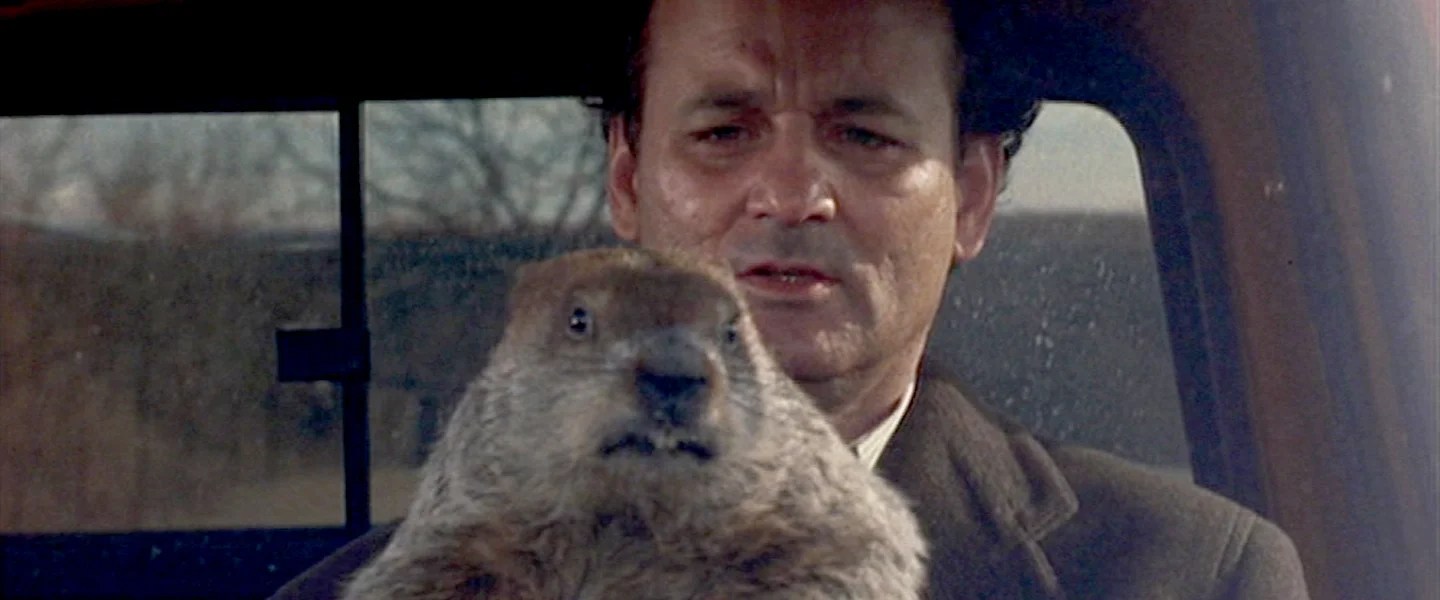
At first, he exploits the situation for personal gain. Then he falls into despair, trying everything he can to break free—including multiple unsuccessful attempts to end his own life. But no matter what he does, he always wakes up to the same song on the radio: “I Got You Babe.”
While Simeon spends his life waiting for the light, Phil is blind to it, stuck in a pattern of his own cynicism and self-interest. Both men stand at the threshold of something new. But only one of them is ready to step forward.
February 2 has long been a feast of light. This time of year was sacred to the Celts, who celebrated Imbolc, a festival marking the first stirrings of spring. Imbolc was associated with Brigid, the goddess (and later saint) of fertility, healing, and light. It was a time to light fires and candles, to purify homes (spring cleaning?), and to watch for signs that winter was giving way to spring. Even the tradition of watching for a groundhog’s shadow has echoes of these older customs—an ancient impulse to look for light in the darkness, to seek assurance that the long winter will end.
In the Episcopal Church and much of the Christian tradition, February 2 is observed as the Feast of the Presentation, commemorating the moment when Mary and Joseph brought Jesus to the temple, where he was recognized by Simeon. It is also known as Candlemas, a day when candles are traditionally blessed as a symbol of Christ, the light of the world. The Feast marks a turning point in the year.
Simeon embodies this turning point. He holds the infant and sees the dawn breaking. He recognizes that his waiting is over, that a promise has been fulfilled. Because of this, he can let go—of life, of uncertainty, of everything. His story is one of peace.
Phil, on the other hand, is trapped in the dark. He cannot recognize the light in front of him because he is consumed by himself. He sees the same people every day but does not truly see them. Instead, he dismisses them, manipulates them, or ignores them entirely. His life has become a meaningless cycle because he refuses to open his eyes.
Bach captures both the peace of recognition and the despair of blindness in Mit Fried und Freud ich fahr dahin (BWV 125), which was written for the Feast of the Presentation on February 2, 1725. The opening chorus is solemn but assured—moving forward yet burdened by the weight of waiting. The music feels like both a journey and a farewell, embodying Simeon’s acceptance of death but also the longing that precedes it. It is a piece about seeing clearly, about understanding what has been in front of you all along.
For Phil Connors, transformation comes only when he stops fighting. Slowly, he begins to engage with the people around him—not as obstacles or as tools, but as fellow human beings. He learns their names, their stories, their struggles. He helps where he can, without expecting anything in return.
And then one morning, the cycle breaks. He wakes up to a new day.
Simeon and Phil both stand at the threshold of something new. One steps forward in peace; the other stumbles until he learns to recognize the light. But in the end, they both arrive at the same place: the moment of release, of letting go, of stepping into a future they do not control but can finally embrace.
Tonight, as we listen to Bach’s music and reflect on this ancient feast, we might ask ourselves: Where are we in this story? Are we waiting like Simeon, eyes open, ready to receive? Or are we resisting like Phil, stuck in patterns we cannot break?
The good news is that once we recognize the light, everything changes, and we can step forward into a new day.